
Direct Answer (TL;DR)
Balcony solar overpanelling pairs higher DC panel capacity (typically 1,200 W to 2,000 W) with a standard 800 W AC microinverterMicroinverterA compact electrical inverter mounted behind panels that converts direct current into grid-synchronized alternating current.Energy.gov Inverter Overview →, creating a DC-to-AC oversizing ratio between 1.5 and 2.5. Per NREL PVWatts modeling, midday generation clipping represents less than 5% of annual solar harvest. In return, overpanelling widens the daily production curve, reaching peak output hours earlier in the morning, sustaining it later into the evening, and delivering up to twice as much power during overcast or winter days. Overpanelling remains completely safe as long as panel open-circuit voltage (Voc) never exceeds the inverter maximum DC input limit (typically 60 V DC).
New balcony solar owners often assume their panels and microinverters should have identical nameplate ratings: an 800 W inverter should connect to exactly 800 W of photovoltaic panels.
In utility-scale engineering and modern residential design, matching solar capacity one-to-one is considered inefficient. Professional solar arrays routinely oversize direct current (DC) panel capacity relative to alternating current (AC) inverter capacity.
This engineering practice is called overpanelling or DC oversizing.
When German lawmakers passed the federal Solarpaket ISolarpaket IGerman federal legislation that raised microinverter AC output to 800 W while legally authorizing up to 2,000 W of DC panel capacity.BMWK Policy Summary → reform package, they codified this exact principle: consumers can legally install up to 2,000 W of DC panel capacity behind an 800 W AC microinverter.
This guide explains the physics of overpanelling, analyzes clipping losses, details electrical voltage and current limits, and demonstrates how oversizing solves low-light apartment challenges.
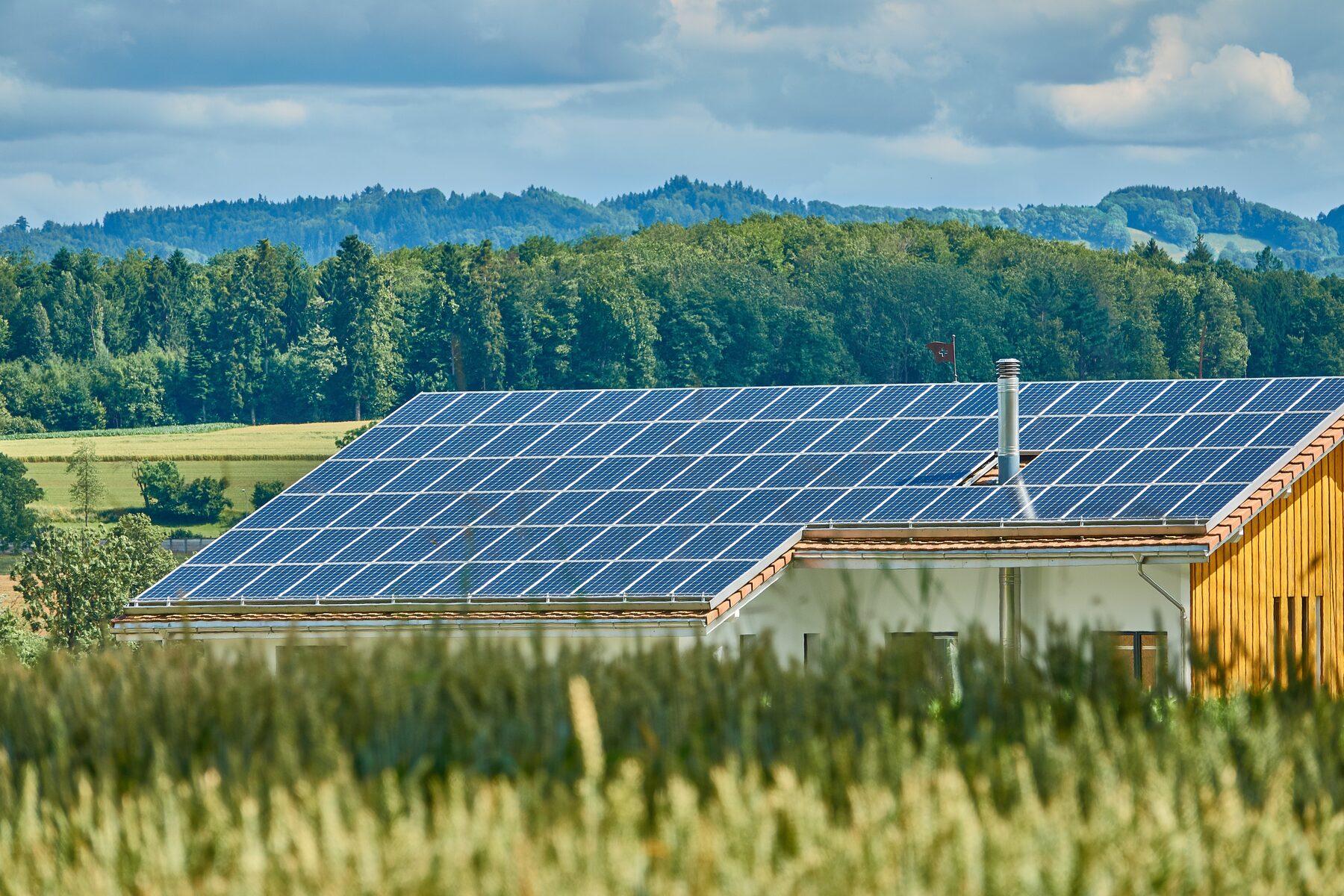 Monocrystalline solar panels. Modern PV modules cost under $0.30 per watt, making
panel oversizing the most cost-effective way to maximize low-light generation.
Photo: Wikimedia Commons (CC0).
Monocrystalline solar panels. Modern PV modules cost under $0.30 per watt, making
panel oversizing the most cost-effective way to maximize low-light generation.
Photo: Wikimedia Commons (CC0).
Reshaping the Generation Curve: Converting Peaks into Plateaus
Solar panels generate electricity proportional to solar irradiance. Rated nameplate capacity (such as 400 W per panel) is measured under Standard Test Conditions (STC): 1,000 watts per square meter of irradiance at a cell temperature of 25°C (77°F).
Real-world conditions rarely match laboratory testing. On an apartment railing, panels mount vertically against railings, encounter hazy skies, or experience elevated summer cell temperatures that reduce nameplate efficiency according to standard photovoltaic thermal coefficients.
Comparing the Narrow Bell Curve and the Oversized Plateau
Consider a standard system with two 400 W panels (800 W DC) connected to an 800 W AC inverter (a 1.0 DC/AC ratio):
- In early morning and late afternoon, solar irradiance is weak (200 W/m² to 400 W/m²). The 800 W array produces only 150 W to 300 W.
- The system approaches its full 800 W rating for only 45 to 60 minutes around solar noon on pristine cloudless summer days.
- The daily generation graph resembles a steep, narrow bell curve.
Now consider an overpanelled system pairing four 400 W panels (1,600 W DC) with the same 800 W AC inverter (a 2.0 DC/AC ratio):
- By 9:00 AM, the 1,600 W array already generates 800 W of DC power. The inverter reaches its maximum AC rating hours earlier.
- The inverter holds maximum 800 W output continuously across midday.
- In the late afternoon, the system stays at maximum capacity until irradiance drops below 500 W/m².
- The daily generation graph transforms from a steep bell curve into a broad, flat-topped plateau (or “mesa”).
Power (W)
  800 |              +------------------------+  <-- Overpanelled (1,600W DC): Wide Plateau
      |             /                          \
      |            /            /\              \
  400 |           /            /  \              \
      |          /            /    \              \ <-- Standard (800W DC): Narrow Peak
    0 +---------+------------+------+--------------+---------> Time of Day
             8:00 AM      12:00 PM      4:00 PM
Debunking the Clipping Myth: Why Midday Loss Is Cheap Energy
When panel generation exceeds inverter capacity, the microinverter curtails excess generation. This phenomenon is called inverter clipping.
Skeptics often view clipping as wasted investment. In reality, clipping represents an intentional economic trade-off.
Evaluating the Financial Economics of Inverter Clipping
Solar panel manufacturing costs have dropped dramatically, often falling below $0.25 to $0.30 per watt for Tier 1 monocrystalline modules. Microinverters and AC electrical infrastructure remain comparatively expensive.
Modeling from the National Renewable Energy Laboratory (NREL) demonstrates that for DC/AC ratios up to 1.5 or 1.8:
- Clipping Losses Are Tiny: Total annual energy lost to midday clipping typically ranges from 2% to 6%.
- Shoulder Gains Are Substantial: Energy gained during morning, evening, and winter hours increases total annual kilowatt-hour harvest by 35% to 60%.
- Payback Accelerates: Because modern panels cost only $100 to $140 each, harvesting extra shoulder-hour kilowatt-hours recovers the second panel investment within two to three years under retail net meteringNet MeteringA billing policy crediting solar owners for surplus energy exported to the local electric grid.DSIRE Policy Database →.
Maximizing Winter and Low-Light Generation
Balcony solar faces unique geometric constraints. In apartment installations, panels usually mount vertically on balcony railings rather than at standard 30-degree roof tilts.
Vertical orientation produces excellent solar capture during low-angle winter months, but diffuse light on cloudy days reduces panel yield significantly.
+-----------------------+---------------------+---------------------+---------------------+
| Operating Condition   | Average Irradiance  | 800W DC System Yield| 1,600W DC Overpanel |
+-----------------------+---------------------+---------------------+---------------------+
| Clear Summer Noon     | 1,000 W/m²          | 720 W - 800 W       | 800 W (clipped)     |
| Hazy Afternoon        | 500 W/m²            | 360 W - 400 W       | 720 W - 800 W       |
| Overcast / Rainy Day  | 150 W/m²            | 100 W - 120 W       | 200 W - 240 W       |
| Winter Low-Angle Sun  | 300 W/m²            | 210 W - 240 W       | 420 W - 480 W       |
+-----------------------+---------------------+---------------------+---------------------+
During dark winter days, an 800 W DC array barely covers background idle loads (refrigerator, router, standby electronics drawing 150 W).
By contrast, a 1,600 W overpanelled array produces 240 W to 300 W in overcast weather, consistently offsetting baseline consumption year-round.
Enforcing Electrical Safety: Managing Voltage and Current Limits
Overpanelling is safe and standard, but it requires respecting exact electrical boundaries. Connecting panels incorrectly can destroy microinverters or create fire risks.
The central rule of electrical sizing: Inverters draw current; panels do not push current.
Limiting Open-Circuit Voltage Below Inverter Ceilings
Voltage is an electromotive force that can damage semiconductor components. Exceeding a microinverter’s maximum DC input voltage destroys internal switching transistors instantly.
- Microinverters specify a Maximum DC Input Voltage (typically 60 V DC per input channel).
- Each panel datasheet lists Open-Circuit Voltage (Voc) under STC (typically 37 V to 44 V for standard 108-cell or 120-cell modules).
- Cold weather increases photovoltaic voltage. Engineers calculate the minimum expected ambient temperature using the panel’s negative temperature coefficient:
Voccold = VocSTC × [1 + βVoc × (Tmin − 25∘C)]
Panels wired in series combine their voltages. Connecting two 40 V panels in series produces 80 V to 90 V in freezing weather, permanently damaging a 60 V microinverter.
Therefore, overpanelled balcony arrays must be connected in parallel, never in series.
Regulating Input Current via Automated MPPT Controllers
A common concern is whether an oversized array will “overload” the inverter with excessive electrical current.
A microinverter manages input using MPPTMaximum Power Point Tracking (MPPT)Microinverter circuitry dynamically modulating electrical resistance to extract peak solar efficiency without overloading components.MPPT Guide → circuitry. The inverter behaves as a variable electronic load:
- If the array can supply 25A but the inverter channel is rated for 14A, the MPPT controller shifts its operating voltage slightly away from the peak power point.
- This adjustment limits current intake to exactly 14A.
- The remaining energy stays uncollected in the solar cells as ambient heat.
Reputable microinverters list both a Maximum Usable Input Current (Imp) (e.g., 14A or 16A) and a Maximum Short-Circuit Current (Isc) (e.g., 20A or 25A). As long as array short-circuit current remains within the manufacturer’s specified Isc rating, the microinverter operates safely.
Selecting Wiring Configurations: Dual MPPT vs. East-West Split
Balcony owners implement overpanelling using two primary wiring strategies:
Connecting via Dual Independent MPPT Channels
Most modern 800 W microinverters (such as Hoymiles HMS-800, APsystems EZ1, or Anker SOLIX) feature two independent MPPT input channels:
- Each MPPT channel receives its own dedicated 400 W to 500 W panel.
- Independent MPPT circuits isolate shaded panels, preventing output losses on unobstructed modules.
- Dedicated channels supply 800 W to 1,000 W DC directly to an 800 W inverter per manufacturer specifications.
Wiring Parallel Y-Branches for Four-Panel Arrays
To achieve a 2.0 DC/AC ratio (1,600 W DC), owners connect two panels in parallel to each MPPT input channel using MC4 Y-branch splitters:
- Connecting in parallel doubles total amperage while keeping voltage identical (approx. 31 V to 34 V Vmp).
- Total array voltage remains safely below the 60 V DC limit.
- Total short-circuit current doubles, requiring verification against the inverter’s maximum rated Isc limit.
Capturing Sunlight with East-West Railing Orientations
If your apartment features a wrap-around balcony or corner terrace, you can orient one panel East and one panel West on the same microinverter channel:
- The East panel captures peak morning sunlight while the West panel remains in shade.
- The West panel captures peak late-afternoon sunlight while the East panel is shadowed.
- Total combined current never exceeds inverter thresholds because the two panels peak hours apart.
- This arrangement provides a self-regulating solar curve without significant midday clipping.
Verifying Regulatory Standards and Electrical Codes
In the United States, plug-in generation connects to existing residential electrical circuits. Systems must comply with equipment safety and electrical codes:
- Inverter Safety Listing: Microinverters must hold certification to UL 1741UL 1741The North American standard for distributed generation equipment, mandating automatic shutdown during power outages.UL 1741 Safety Guide → and IEEE 1547. Certified hardware incorporates rapid anti-islandingAnti-IslandingA safety mechanism de-energizing inverter AC output within 200 milliseconds of utility grid failure.Anti-Islanding Safety Guide → circuitry, halting backfeed instantly if grid power drops.
- AC Output Limits: Regardless of whether you connect 800 W or 2,000 W of DC panels, an 800 W microinverter never outputs more than 800 W AC (6.67A at 120V).
- Branch Circuit Loading: National Electrical Code (NEC 705.12NEC 705.12National Electrical Code rules governing point of connection and busbar ampacity limits for backfed power sources.NFPA Electrical Code →) regulates backfed breakers and busbarBusbarThe conductive metallic strip inside an electrical breaker panel that distributes electricity to individual branch circuits.NFPA Busbar Ratings → ampacity. An 800 W system backfeeding 6.67A operates comfortably within 15A branch ratings on 14 AWG copper wire.
Check state laws regarding plug-in limits in our guide Is Balcony Solar Legal in My State or review utility notification guidelines in Utility Permission for Plug-in Solar.
Evaluating When to Overpanel Balcony Systems
Overpanelling substantially increases annual generation from small apartment systems.
Northern latitudes, East-West corner railings, and frequent cloud cover make panel oversizing valuable. Sizing DC capacity above inverter ratings (modeled in our Household Sizing & Payback Simulator) transforms winter solar yield. Oversized DC arrays capture vital energy during peak demand without requiring costly high-amperage electrical service upgrades.
To calculate custom payback periods and system economics for your address, explore our interactive Household Sizing & Payback Simulator. If you are renting your apartment, read our step-by-step guide Can a Renter Install Balcony Solar Without Landlord Permission?.