Books worth your time

Original summaries of the reading that shaped this site's take on balcony solar, plug-in PV, and the grid. Every summary is ours; every cover identifies the book it points to.

Cover of Sustainable Energy: Without the Hot Air

Sustainable Energy: Without the Hot Air

David J. C. MacKay · 2009 · UIT Cambridge

energy-basics arithmetic

MacKay works through Britain's entire energy system using arithmetic a motivated reader can reproduce, putting every source and sink of power in the same units and refusing to let adjectives substitute for numbers. Renewables come out physically constrained but far from useless, and the book is scrupulous about showing its work on every page. The free online edition made it the reference text for anyone who wants to reason about energy rather than have feelings about it.
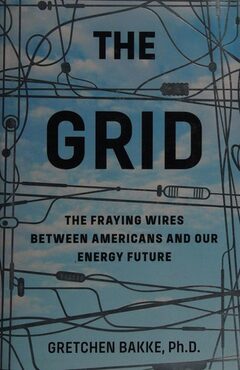

Cover of The Grid

The Grid

Gretchen Bakke · 2016 · Bloomsbury USA

grid-basics history

Bakke tells the cultural and technical history of the American power grid as a story of competing visions rather than neutral machinery, from Edison and Tesla through deregulation to rooftop solar fights. The grid comes across as a fragile, contested artifact whose rules were written by people, which means they can be rewritten. Her accounts of utility battles over net metering read differently once you see interconnection as a policy choice.

Cover of Taming the Sun

Taming the Sun

Varun Sivaram · 2018 · MIT Press

solar innovation

Sivaram argues that cheap silicon panels are only the beginning of what solar must become, and that innovation in financing, storage, and advanced materials decides whether solar can carry a large share of global supply. He is notably honest about the limits of the current cost-decline story and about the public-investment choices that got the industry here. The chapters on emerging markets describe grids that leapfrog central infrastructure entirely.

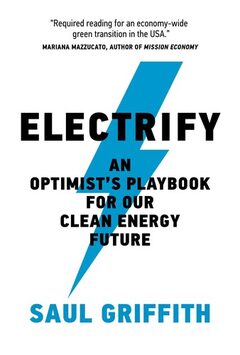
Cover of Electrify

Electrify

Saul Griffith · 2021 · MIT Press

electrification household

Griffith lays out a plan to decarbonize American life by electrifying everything households actually touch: cars, heating, hot water, cooking, and the plugs on the wall. The argument is built on the claim that an electrified home is cheaper to run, and that the transition is an enormous household-level economic opportunity rather than a sacrifice. He is concrete about appliances, wiring, and the decisions a homeowner actually faces.

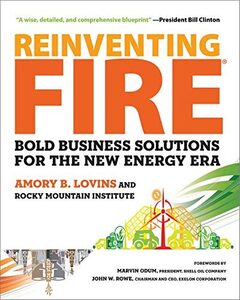
Cover of Reinventing Fire

Reinventing Fire

Amory B. Lovins and Rocky Mountain Institute · 2011 · Chelsea Green Publishing

energy-policy efficiency

Lovins and the Rocky Mountain Institute assemble a business-led case for running a fully decarbonized United States on efficiency plus renewables, sector by sector, with integrative design doing most of the work. The book's signature move is counting the savings from using energy in radically better ways before counting new supply. Its scenarios were audited against mainstream forecasts and have aged better than most 2011 energy predictions.

Shorting the Grid

Meredith Angwin · 2020 · Carnot Communications

utility-markets grid-basics

Angwin explains how organized electricity markets actually compensate power plants, and why the visible auction price is the beginning of the story rather than the end. She walks through capacity markets, reliability requirements, and the closed-door structures that set what generators and, eventually, customers pay. The book is written from inside the industry and names the mechanisms most reporting skips.