
Direct Answer (TL;DR)
Whether you need utility permission for a plug-in solar kit depends on your state statutes and utility rules. Standard rooftop solar requires a formal Interconnection Agreement and Permission to Operate (PTO).
Pioneer state laws establish dedicated plug-in pathways. Utah (HB 340, effective May 7, 2025) exempts certified devices of up to 1,200 watts from interconnection agreements and fees without requiring prior approval. Colorado (HB26-1007, effective August 12, 2026) permits systems up to 1,920 watts, allowing utilities to require informational notice. Maryland (Chapter 353, effective July 1, 2026) mandates pre-installation notice for systems up to 1,200 watts. In states lacking plug-in statutes, uncoordinated connections risk unconfigured smart meters recording solar exports as consumed power.
The single most confusing hurdle for new balcony solar owners is figuring out what their electric utility requires. Product websites often advertise “plug-and-play” simplicity, yet online forums are filled with warnings about interconnection queues, application fees, and uncooperative utilities.
The root of this confusion is that electric utilities distinguish between three entirely different levels of procedural oversight:
- Statutory Exemption: State legislation explicitly excludes small, certified plug-in systems from standard utility approval queues and fees.
- Written Notification: Submitting an informational form to the utility stating that certified equipment is connected, without waiting for engineering review or approval.
- Prior Approval / Permission to Operate (PTO): A mandatory review process where the utility conducts an interconnection study, verifies system capacity, and issues formal written permission before you can turn the system on.
Understanding where your installation falls among these categories prevents costly mistakes and ensures you do not trigger unexpected utility penalties.
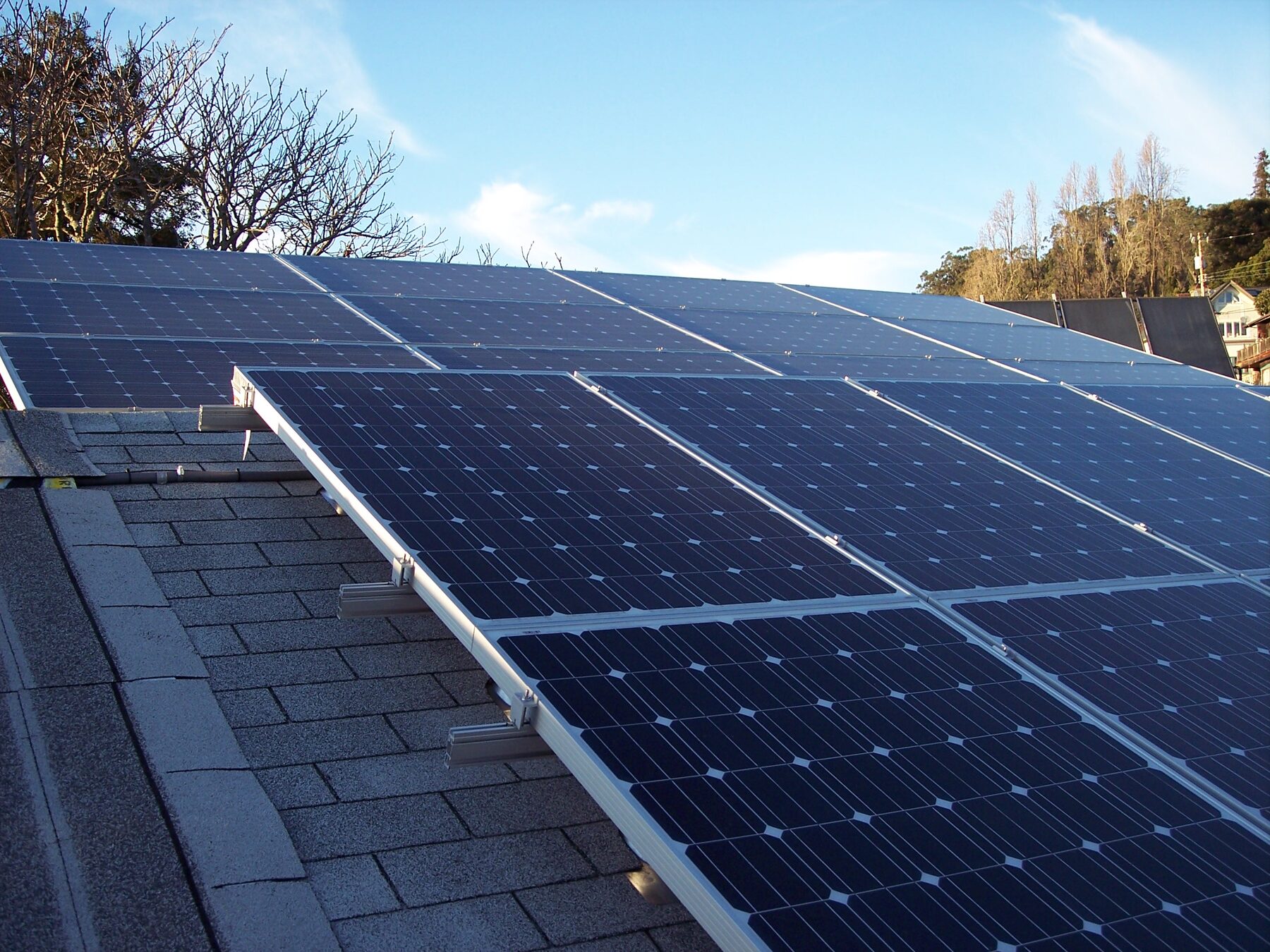 Residential solar wiring and racking hardware. Grid-tied systems require UL
1741-certified anti-islanding microinverters to protect lineworkers during outages.
Photo: Wikimedia Commons (CC0).
Residential solar wiring and racking hardware. Grid-tied systems require UL
1741-certified anti-islanding microinverters to protect lineworkers during outages.
Photo: Wikimedia Commons (CC0).
1. Written Notification vs. Prior Approval (PTO)
To understand utility requirements, you must understand why utilities care about grid-connected generation in the first place: lineworker safety and grid stability.
If the grid goes down due to a storm or downed power line, any generator feeding electricity into the neighborhood grid could electrocute repair crews. For this reason, all grid-tied solar systems must use inverters certified to UL 1741UL 1741 StandardThe definitive North American standard for inverters, converters, and interconnection equipment used with distributed energy resources. UL 1741 Safety Guide → standards with automatic anti-islandingAnti-Islanding ProtectionAn automated safety mechanism that stops the inverter energizing the local grid within 2.0 seconds when grid power is lost. Anti-Islanding Safety Guide → protection.
Under UL 1741 and IEEE 1547, the microinverterMicroinverterA compact inverter attached to an individual solar panel that converts direct current (DC) to household alternating current (AC) at module level. Energy.gov Inverter Overview → constantly samples grid frequency and voltage. If the grid signal drops, the inverter ceases energizing the circuit within 2.0 seconds.
The Standard Rooftop Path: Prior Approval (PTO)
For traditional rooftop installations (typically 4,000 W to 12,000 W), utilities require an engineering review, structural permits, electrical permits, a witness test or inspection, and a formal Permission to Operate (PTO) letter. This process often takes 4 to 12 weeks and carries application fees ranging from $50 to $500.
The Three State Legislative Models for Plug-in Solar
Because balcony solar kits are small (typically 400 W to 800 W) and plug directly into standard branch circuits using factory-assembled, sealed UL 1741 microinverters, their risk profile differs fundamentally from a large rooftop array.
Three forward-looking state statutes illustrate distinct regulatory models:
- Model 1: Statutory Exemption (Utah HB 340 / Utah Code § 54-15-601). Enacted in 2025 and effective May 7, 2025, Utah law creates a streamlined pathway for portable solar generation devices with a maximum power output of not more than 1,200 watts. A qualifying device must be certified by UL or an equivalent nationally recognized testing laboratory and include a feature that stops it energizing the building during a power outage. It is exempt from the statute’s interconnection requirements and from any requirement to enter into an interconnection agreement, and an electrical corporation may not require prior approval or fees. The statute does not mandate customer written notice, but it specifically excludes portable solar from the state net-metering program, meaning excess export is not guaranteed compensation.
- Model 2: Provider-Discretionary Notice (Colorado HB26-1007 / C.R.S. § 40-2-140). Signed May 7, 2026, the act’s general provisions commence on August 12, 2026 unless a referendum petition was filed. Colorado established a 1,920-watt ceiling on output to the grid, for one listed system per address and one device per wall outlet. Utilities may not require prior approval or fees, but may require notification of the device’s presence and size. Devices of 391 watts or less are also exempt from the state’s solar installation supervision rules and from code provisions that would require rewiring. Statutory HOA and property covenant protections begin January 1, 2027.
- Model 3: Mandatory Pre-Installation Notice (Maryland Chapter 353 / PUA § 7-321). Effective July 1, 2026, Maryland established a formal notification pathway for portable solar systems that supply not more than 1,200 watts back to the building, one per electric meter for residential use only. The statute requires the customer to notify the electric company before installation and certify the system’s safety features and maximum capacity. A system with 391 watts or less of output to a standard outlet is exempt from product-listing provisions that would require alterations to the building’s premises, wiring or electrical panels. The customer pays for an automatic locking disconnect only if the system requires one.
Crucially: Do not assume contacting your utility creates an approval requirement where state statute has removed it. In an exemption state, your system operates under the statutory rights established by the legislature.
2. The Smart Meter Trap: Why Uncoordinated Systems Lose Money
Even with certified safety hardware, operating a plug-in solar kit without utility coordination can cause an unwelcome financial surprise. You risk paying the utility for generated solar power.
Most older mechanical analog meters (the glass domes with spinning metal disks) turn backward when power flows out of a house into the street. But modern digital smart meters (Advanced Metering Infrastructure, or AMI) operate on firmware algorithms.
How Smart Meters Register Reverse Current
Smart meters are programmed with specific register configurations:
- Bidirectional Mode (Net Billing / Net Metering): The meter has two separate registers–delivered energy (consumed from the grid) and received energy (exported to the grid). The utility calculates billing based on your applicable tariff.
- Unidirectional / Detented Mode: The meter measures power flowing in only one direction. If current flows backward toward the street, the internal electronic detent ignores the export. No credit is awarded, but no penalty is assessed.
- Delivered-plus-received (non-detented) mode: Some meters add energy flowing in either direction to the consumption register; Itron calls this its standard undetented configuration. Suppose an 800 W array exports 300 watts continuously for one hour during quiet household periods. The meter adds 0.3 kWh to the consumption it records, as if appliances had used it. Whether you pay for it depends on how your utility bills from that register.
Before connecting a plug-in system, you must ensure your meter is either provisioned for bidirectional measurement or that your daytime household consumption absorbs your array output.
3. What to Ask Your Utility: A 5-Point Research Checklist
When researching utility rules, avoid asking generic questions like whether balcony solar panels are legal. Customer service representatives are trained on standard rooftop interconnection rules. They will routinely send you a 40-page net metering application intended for a 10 kW roof array.
Instead, use this targeted 5-point research checklist:
Step 1: Identify Your Exact Retail Tariff
Log into your utility customer portal and locate your electricity rate schedule (e.g., “Schedule R - Residential General Service” or “Time-of-Use TOU-D”). Look for the utility’s published tariff rider governing distributed generation or customer self-generation.
Step 2: Request the Distributed Generation Limit
Check your utility’s interconnection rules for the smallest systems. Municipal utilities and electric cooperatives set their own rules, so ask whether a system of a few hundred watts needs a full interconnection agreement.
Step 3: Document Equipment Topology and Ratings
Have your hardware cut sheet ready before contacting the interconnection department:
- DC Nameplate Capacity: Total rated wattage of your solar panels (e.g., two 400 W panels = 800 W DC).
- AC Inverter Continuous Output: Maximum AC power rating of your microinverter (e.g., 600 W or 800 W AC).
- Safety Listing: Authentic certification marks for UL 1741 or UL 1741-SB and IEEE 1547 compliance.
- Connection Voltage: Standard 120 V single-phase alternating current through a NEMA 5-15 receptacle.
Step 4: Verify Your Current Meter Type
Inspect the digital face of your utility electric meter:
- Does the display alternate between displays (e.g., screen code 01 vs 02)?
-
Does the screen display a bidirectional arrow symbol (
<--or-->) indicating current power flow direction? - If the meter does not support bidirectional billing, ask the utility about their standard meter reprogramming or exchange procedures for customer self-generation.
Step 5: Ask for Written Policy in Writing
Always communicate with the utility’s interconnection or renewable energy department via email or secure customer portal. Request the specific tariff section or rule number governing small customer generation. Verbal assurances over the phone offer zero legal protection if an inspector questions the installation later.
4. Comparing Utility Procedural Pathways
Across the 9 states that have enacted dedicated plug-in solar legislation, procedural requirements fall into four distinct statutory archetypes:
-
Statutory Exemption States (e.g., Utah HB 340, Vermont Act 149, Connecticut P.A.
26-127, New Jersey P.L.2026, c.82):
- Required Action: The statutes set no utility notice step, and utilities may not require approval. Qualifying plug-in devices up to 1,200 W are exempt from interconnection agreements; Connecticut allows one device per customer meter. In Vermont the 1,200 W is the combined inverter capacity per electric meter, and in New Jersey the combined output per service address or dwelling unit.
- Interconnection Agreement & Fees: Utilities cannot require interconnection agreements, prior approval or extra equipment. The fee bars differ: Connecticut still allows charges the system incurs through its use, and Vermont bars fees related to installation.
- Grid & Regulatory Filings: Vermont explicitly exempts systems from the Certificate of Public Good (CPG) filing process (tenant notice is directed to the landlord, not the utility). New Jersey towns may not require a permit, application, fee, license or other approval to place or use a device.
- Effective Dates: Connecticut’s framework takes effect October 1, 2026, and New Jersey’s Garden State Balcony Solar Act on March 1, 2027.
- Export Treatment: Utah law explicitly separates portable plug-in solar from statutory net-metering programs; export treatment depends on utility tariff. Vermont devices may only be used with smart meters, exported power is not paid for, and a net-metering customer may not also install one.
-
States With a Lower Wattage Level (e.g., Colorado HB26-1007, Maryland Chapter
353, Maine LD 1730):
- Lower Level: Colorado and Maryland set no separate installation tier at 391 W; they exempt systems of that size from certain provisions. Colorado exempts them from code or listing provisions that would require alterations to the building’s electrical wiring, and from its solar installation supervision rules. Maryland exempts them from product-listing provisions that would require alterations to the building’s premises, wiring or electrical panels. Maine allows up to 420 W of combined inverter output per service address, measured in alternating current, with no electrician condition.
- Upper Limit: Maryland allows up to 1,200 W back to the building’s electric system, one system per electric meter for residential use. Colorado allows up to 1,920 W to the grid and sets no dedicated-circuit requirement, but only devices of 391 W or less are exempt from its solar installation supervision rules. In Maine, combined inverter output above 420 W and up to 1,200 W per service address is allowed with conditions. Each system must be installed by a Maine-licensed electrician on a dedicated single-outlet circuit, and the utility notified within 30 days.
- Covenant & HOA Protections: From January 1, 2027, Colorado voids covenants or restrictions that unreasonably prohibit or restrict a device. It also lets an owner in a common interest community install one on a limited common element.
-
Customer Notification States (e.g., Maryland Chapter 353, Maine LD 1730, New
Hampshire SB 540):
- Pre-Installation Notice: Maryland requires the customer to notify the electric company before installation and to certify the system’s safety features and maximum capacity.
- Post-Installation Notice: Maine requires notice to the serving transmission and distribution utility within 30 days after installation. New Hampshire lets utilities set up a way for customers to report system wattage after installation, for notification purposes only.
- Utility Restraint: Utilities may not require prior approval. Maine bars fees related to the system, New Hampshire bars them except charges the system incurs through its use, and Maryland bars fees related to feeding power back.
- Safety Certification: Maryland requires certification by UL or an equivalent nationally recognized testing laboratory, and New Hampshire by a nationally recognized testing laboratory. Maine accepts a listing or certification to UL 3700, certification by a nationally recognized testing laboratory to a comparable standard, or configuration to the National Electrical Code as adopted by its Electricians’ Examining Board.
- Effective Dates: Maryland’s law took effect July 1, 2026, and Maine’s July 29, 2026. New Hampshire’s plug-in provisions take effect January 1, 2027; its building-code section waits on certification that a national standard exists.
-
Commission Notice Form States (e.g., Virginia SB 250 / Chapter 998):
- Required Action: Virginia requires the customer to submit the form established by the Commission before installing a system of up to 1,200 W, with a 15-day utility completeness review window.
- Effective Dates: Virginia’s act takes effect January 1, 2027.
- Consumer Protections: Restricts utility discretion to block safe, certified equipment.
-
Standard Investor-Owned Utility (States Without Dedicated Legislation):
- Required Action: Submit simplified or Tier 1 Interconnection Application.
- Wait Time: 2 to 6 weeks for utility review.
- Interconnection Fees: $0 to $100 depending on tariff.
- Meter Treatment: Smart meter reprogrammed or upgraded to bidirectional profile.
Summary and Next Steps
Do not let fear of utility paperwork discourage you from exploring balcony solar. Nine U.S. states–Utah, Colorado, Maryland, Connecticut, Maine, New Hampshire, New Jersey, Virginia, and Vermont–have already enacted dedicated statutes protecting plug-in solar rights, with more than 20 additional states advancing active legislation.
If you are ready to evaluate your jurisdiction:
- Use our Interactive State Legality Finder to check your state’s current statutory status.
- Learn how to calculate your expected bill savings and return on investment in our Balcony Solar Sizing and ROI Guide.
- If you already have rooftop solar, read our guide on adding balcony or plug-in solar to an existing solar home to avoid voiding your grandfathered net metering agreement or violating PTO limits.